
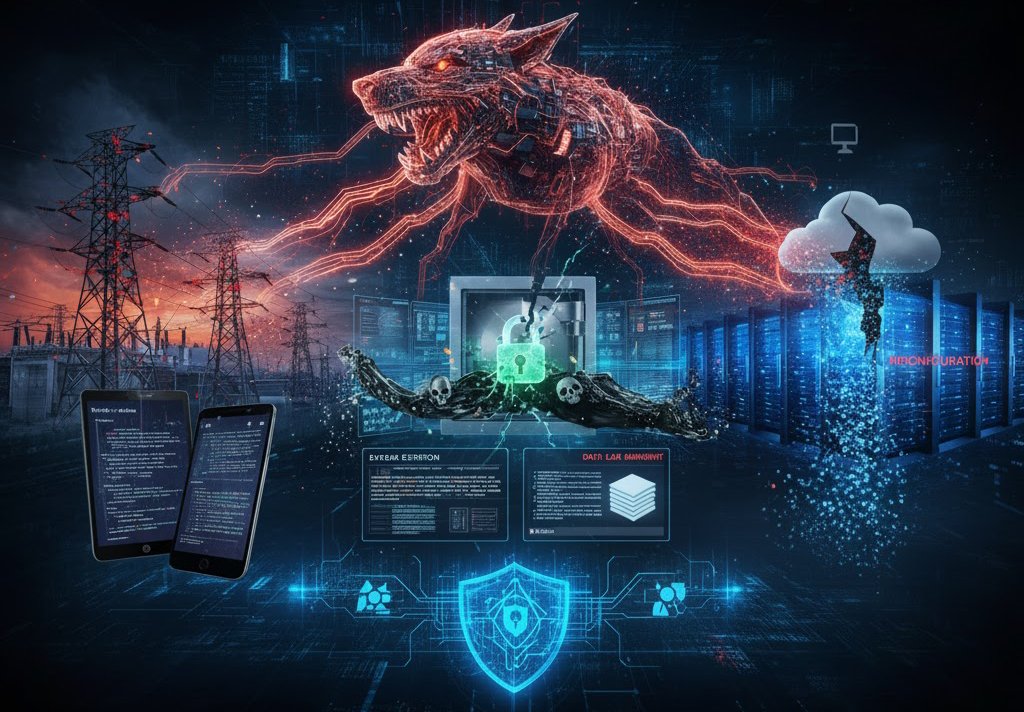
The digital world has never been more pervasive, and with that integration comes an increasingly complex and hostile cybersecurity environment. Today’s threats are no longer limited to simple viruses; they are sophisticated, often state-sponsored, and increasingly augmented by cutting-edge technology like Artificial Intelligence (AI). The current cybersecurity landscape is defined by the speed, scale, and stealth of attacks, demanding a fundamental shift in how organizations and individuals approach digital defense.
The AI-Accelerated Threat
Artificial Intelligence, while a powerful tool for defense, is proving to be an even more formidable weapon in the hands of threat actors. AI is no longer a futuristic concept—it’s actively being used to supercharge existing attack vectors.
- Advanced Social Engineering: Generative AI enables the creation of hyper-realistic deepfakes—manipulated video or audio—to impersonate executives or trusted individuals, fooling employees into divulging sensitive information or transferring funds. Phishing emails, once riddled with grammatical errors, are now contextually flawless and highly personalized, making them nearly indistinguishable from legitimate communications. The sheer volume and sophistication of these campaigns, known as AI-powered phishing, are overwhelming traditional human-based security training.
- Polymorphic Malware: Attackers use machine learning to create AI-driven malware that can mutate its code in real-time. This dynamic nature allows the malicious software to evade static detection by conventional antivirus programs, making it stealthier and more persistent.
- Faster Exploitation: AI and automation tools are being used to rapidly identify and exploit software vulnerabilities, reducing the window of time organizations have to patch a known flaw—a concept known as zero-day exploitation.
Ransomware’s Evolving Extortion Model
Ransomware remains a dominant and highly disruptive force. However, its business model has matured beyond simply encrypting data and demanding a ransom. Today, it operates as a full-scale, highly organized criminal enterprise, often leveraging a Ransomware-as-a-Service (RaaS) model, which lowers the barrier to entry for less-skilled criminals.
The threat has evolved into multifaceted extortion. Attackers not only encrypt the data but also exfiltrate (steal) the data before encryption. This gives them two powerful leverage points: the victim must pay to decrypt their files, and they must pay a second, often larger ransom to prevent the stolen data from being publicly leaked, which could result in massive regulatory fines and reputational damage. This strategy targets the most sensitive information, hitting industries like healthcare and finance particularly hard.
The Crisis of Critical Infrastructure and Geopolitics
A significant and escalating threat is the targeting of critical infrastructure—the systems and assets vital to a nation’s functioning, such as power grids, water treatment plants, and transportation networks.
- Nation-State Actors: Geopolitical tensions have spilled over into cyberspace, with adversarial nation-states like the Chinese Communist Party, Russia, Iran, and North Korea actively engaging in cyber espionage and conducting reconnaissance against critical U.S. and allied systems. Their goal is often to steal intellectual property, gain a strategic advantage, or simply be positioned to disrupt operations in the event of a conflict.
- IT/OT Convergence: The blurring line between traditional Information Technology (IT) and Operational Technology (OT)—the systems that control physical industrial processes—creates new pathways for attack. A successful cyber intrusion into an IT network can potentially cascade into a physical disruption of an OT system, leading to real-world consequences like blackouts or equipment failure.
Supply Chain and Cloud Vulnerabilities
In an interconnected world, an organization’s security is only as strong as its weakest vendor. Supply chain attacks—where an attacker compromises a third-party partner or software vendor to gain access to a larger target—have become a preferred method for sophisticated groups. By injecting malicious code into widely used software updates or components, attackers can simultaneously compromise thousands of downstream customers.
Furthermore, the mass migration to cloud environments has introduced new security challenges. Cloud misconfigurations—simple, often accidental errors in setting up cloud security settings—are now one of the leading causes of major data breaches. As organizations rapidly deploy new cloud services, security often lags behind, leaving vast amounts of sensitive data exposed through insecure APIs and storage buckets.
Fortifying the Digital Border
The threats of today are characterized by their integration with new technology and their focus on maximizing financial and geopolitical impact. To effectively navigate this complex landscape, a layered, proactive defense strategy is non-negotiable.
This strategy centers on three pillars:
- AI for Defense: Organizations must utilize AI-driven security tools to combat AI-driven attacks. This includes advanced threat detection, automated incident response, and continuous monitoring.
- Identity-First Security: With traditional network perimeters dissolving due to remote work and cloud adoption, Zero Trust Architecture is essential. Every user and device, whether inside or outside the network, must be authenticated and authorized before accessing any resource.
- Human Resilience: Since social engineering remains highly effective, regular and sophisticated security awareness training—including simulated phishing and deepfake-based attacks—is crucial to turning employees into a strong line of defense.
In the ever-evolving cyber battleground, proactive resilience and constant adaptation are the only paths to survival. Security is no longer an IT issue; it is a fundamental business imperative.
Would you like me to elaborate on a specific threat vector, such as ransomware or AI-driven attacks?
Source: Check Point Software – AI Phishing Attacks – An Evolving Threat
- Link: https://www.checkpoint.com/cyber-hub/threat-prevention/what-is-phishing/ai-phishing-attacks/
Source: TraceSecurity – AI-Powered Phishing: The Rise of Hyper-Personalized Email Scams
Source: University of San Diego Online Degrees – Top Cybersecurity Threats [2025]
- Link: https://onlinedegrees.sandiego.edu/top-cyber-security-threats/
Source: Palo Alto Networks – What is Multi-Extortion Ransomware?
- Link: https://www.paloaltonetworks.com/cyberpedia/what-is-multi-extortion-ransomware
Source: Crowe LLP – Mitigating the Risk of Triple-Extortion Ransomware Attacks
- Link: https://www.crowe.com/insights/crowe-cyber-watch/mitigating-risk-triple-extortion-ransomware-attacks
Source: The Register – Europe’s energy grid faces growing cyber threat (Context on global critical infrastructure targets)
Source: Imperva – Cybersecurity Threats | Types & Sources (Includes nation states, terrorists, and critical infrastructure as targets)
- Link: https://www.imperva.com/learn/application-security/cyber-security-threats/
Source: Palo Alto Networks – What Is Zero Trust Architecture? Key Elements and Use Cases
- Link: https://www.paloaltonetworks.com/cyberpedia/what-is-a-zero-trust-architecture
Source: Imperva – Cybersecurity Threats | Types & Sources (Covers supply chain attacks)
- Link: https://www.imperva.com/learn/application-security/cyber-security-threats/