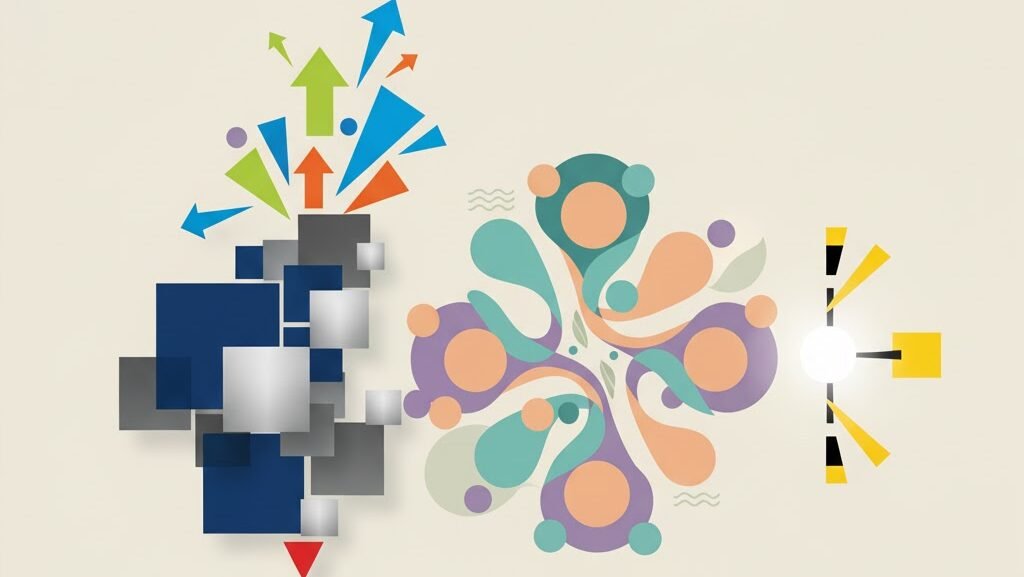
In the dynamic world of advertising, every element on the canvas plays a crucial role in conveying a message. While colors, fonts, and imagery often steal the spotlight, the humble shape is a silent powerhouse, subtly influencing perception, evoking emotion, and guiding the viewer’s journey through a design. Understanding the psychology of shapes and how to wield them effectively is a cornerstone of compelling advertising design.
The Foundation: Geometric Shapes and Their Meanings
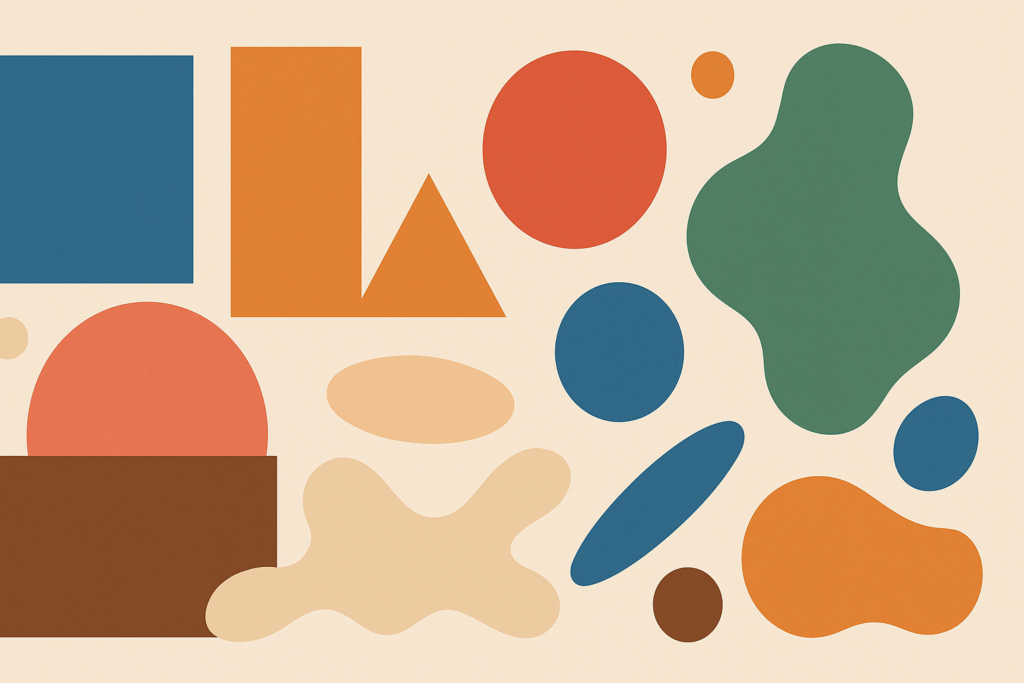
Geometric shapes are precise, structured, and often symbolize order and stability. Their inherent meanings are deeply ingrained in our subconscious:
- Squares and Rectangles: These are the most common and familiar shapes in design, representing stability, balance, and professionalism. They convey a sense of reliability and structure. Think of corporate logos, packaging, and website layouts that use squares and rectangles to suggest trustworthiness and efficiency. While stable, too many can feel rigid; creative marketers often break this rigidity with asymmetry or complementary shapes. `
- Triangles: Triangles are dynamic and carry a sense of direction, energy, and even aggression (when pointing upwards). They can symbolize growth, progress, and power. An upward-pointing triangle suggests stability and aspiration, while an inverted one can indicate instability or caution. They are often used in designs where movement, innovation, or a strong statement is desired, such as in sports brands or tech companies.
- Circles, Ovals, and Ellipses: These shapes are soft, complete, and evoke feelings of unity, community, and wholeness. They have no beginning or end, suggesting continuity, harmony, and protection. Circles are frequently used in designs that want to convey warmth, friendliness, love, or an interconnected experience. Think of social media logos or brands emphasizing community and global reach. Their softness can be a counterpoint to the sharp edges of other shapes.
The Flow: Organic Shapes and Their Appeal
Organic shapes, also known as freeform or amorphous shapes, are irregular and asymmetric, often found in nature. They are less structured than geometric shapes and tend to evoke more natural, comfortable, and unpredictable feelings.
- Natural Forms: Leaves, clouds, water ripples, or abstract, flowing lines all fall under organic shapes. They symbolize nature, comfort, spontaneity, and creativity. When used in advertising, organic shapes can make a brand feel more approachable, eco-friendly, or artistic. They can soften a design, creating a more relaxed and human feel, which is particularly effective for brands focused on wellness, food, or lifestyle. `
- Blob and Irregular Shapes: These shapes break away from strict geometry, offering a sense of playfulness, uniqueness, and artistic flair. They can be excellent for brands looking to stand out, convey creativity, or appeal to a younger, more avant-garde audience.
The Power of Combination and Contrast
The true art of using shapes in advertising lies not just in understanding individual meanings, but in how they are combined and contrasted within a design.
- Guiding the Eye: Shapes are excellent tools for directing a viewer’s gaze. A series of triangles can lead the eye towards a call to action. A circular frame can draw attention to a key product image. The negative space created by shapes is just as important as the shapes themselves.
- Creating Balance and Tension: A design dominated by squares might feel too rigid. Introducing a few circles can add softness and balance. Conversely, a design that’s too organic might lack structure; geometric elements can provide necessary anchors.
- Subtle Storytelling: Consider a banking advertisement. While stability (rectangles) is key, incorporating subtle circular elements might suggest community or customer focus. For a cutting-edge tech product, sharp angles (triangles) can convey innovation, while smooth curves can imply user-friendliness.
- Branding and Identity: Many successful brands leverage specific shapes in their logos and overall visual identity to reinforce their core values. The swoosh of Nike, the interconnected circles of Mastercard, or the sharp angles of Adidas all communicate something fundamental about their brand.
Tools and Techniques
Modern design software like Adobe Illustrator, Photoshop, Figma, and Canva provide powerful tools for manipulating and creating shapes. Designers can:
- Utilize vector tools for precise geometric constructions.
- Employ organic brush strokes and freehand drawing for natural forms.
- Experiment with shape builders and pathfinders to combine and subtract shapes, creating unique compositions.
- Focus on the principles of gestalt psychology, such as proximity, similarity, and closure, to make shapes work together harmoniously and effectively communicate.